I Tested 7 Options Flow Scanners So You Don't Have To
Disclaimer: All ticker prices, premiums, and return calculations shown are examples for educational purposes and reflect market conditions at the time of writing. They are not trade recommendations. Options trading involves significant risk of loss. Past performance of any strategy does not guarantee future results. Consult a licensed financial professional before trading.
I sell puts. That's my thing. Cash-secured puts, covered calls, wheels. I run maybe 10-15 positions at a time on names like SOFI, CHWY, AFRM, and DASH depending on what IV looks like that week. Last year I was paying $149/month for FlowAlgo and realized I was using about 20% of it. Mostly just checking if there was unusual activity before I sold a put. That's an expensive gut check. So I spent the next year trying basically everything. Not free trial tourism where you click around for 20 minutes and write a review. Actually using these tools to research trades, track what happened, and figure out which alerts led to money and which ones were just noise.
What I Actually Needed
Most flow scanner reviews are written by people who buy options. They want to catch the next NVDA sweep and ride it. That's fine, but it's not me.
As a premium seller, I need different things from flow data. I need to know if institutional money is positioned against my trade before I sell a put. I need to know if the big money is buying calls (good for my short put) or loading up on puts (bad, get out). I need maybe 5-10 high conviction signals per day, not 500 raw alerts I have to filter through while also running a business.
And I need the tool to cost less than one bad trade per month, because otherwise what's the point.
Barchart
If you've never looked at options flow data before, start with Barchart. Their free unusual activity scanner shows you the top volume plays, lets you filter by type, and gives you enough context to start understanding what institutional flow looks like.
The paid version is $29.95/month and adds real-time data, but honestly the free tier covers most of what a retail trader needs for basic screening. I used it for two months before upgrading to anything.
Good for learning. Not great for filtering. Every alert looks equally important, so you're doing all the heavy lifting yourself.
OptionStrat
OptionStrat's free strategy builder is one of the most useful things in all of options trading. The visual P&L diagrams make any strategy instantly understandable. If you're selling a put spread and want to see your risk profile, this is the tool.
Their paid flow product runs $89.99/month, which is steep for what you get compared to dedicated flow platforms. But the free tools alone are worth bookmarking.
Unusual Whales
UW is the most recognizable name in this space. They've built a massive community on Twitter and Reddit, and the platform is genuinely comprehensive. Flow alerts, dark pool data, options chains, the congress trading tracker (which is honestly entertaining even if you never trade off it), and tons of historical data.
Free tier gives you delayed data. Premium is about $48-50/month.
The problem is information overload. There's so much data on the screen that figuring out what to focus on becomes its own full-time job. And there's no built-in way to track whether following any of these signals actually makes money over time. You're staring at a firehose and hoping you grabbed the right drop.
FlowAlgo
FlowAlgo is the premium tier at $149/month and it's built for people who are making 10+ trades a day. Real-time sweep detection, dark pool prints, voice alerts. If you're a full-time day trader with a six figure account, the speed is worth paying for.
If you're a part-time swing trader selling 3-4 puts per week, you are paying for a Formula 1 car to drive to the grocery store.
I used it for six months. The data quality is excellent. I just couldn't justify the cost for how I actually trade.
Market Chameleon
Market Chameleon pairs a solid options scanner with the best educational library in this space. Their video tutorials and learning paths are genuinely good. The scanner itself has strong IV rank tools and unusual volume detection.
Pricing is $39-79/month depending on tier.
If you're still building your understanding of how options flow works, Market Chameleon teaches you while you trade. The learning curve on the platform itself is real though. It's dense.
Tradytics
Tradytics runs machine learning across their whole platform. Their "Algo Flow" feature applies proprietary algorithms to catch patterns that traditional scanners miss. They also cover stocks and crypto, not just options.
Around $40-50/month with limited free access.
The strength is breadth. The weakness is that the AI feels like a black box. You see a score but don't always understand what drove it. As someone who builds tools myself, I want to see the inputs, not just the output.
Quant Data
Quant Data has officially licensed exchange data in a clean interface at a lower price than FlowAlgo or Cheddar Flow. Their "golden sweeps" feature highlights the highest conviction institutional trades.
About $37-49/month.
Good value if you want clean flow data without paying FlowAlgo prices. Smaller community and fewer learning resources though.
A Note on Flow Proof
I built Flow Proof, so I'll be upfront about where it fits.
It started as a flow-scoring tool. After a year of using other scanners, I wanted to know whether following flow data actually made money, so I built a system that scored trades and tracked the results. That live flow feed is turned off now, and Flow Proof is not a flow scanner anymore.
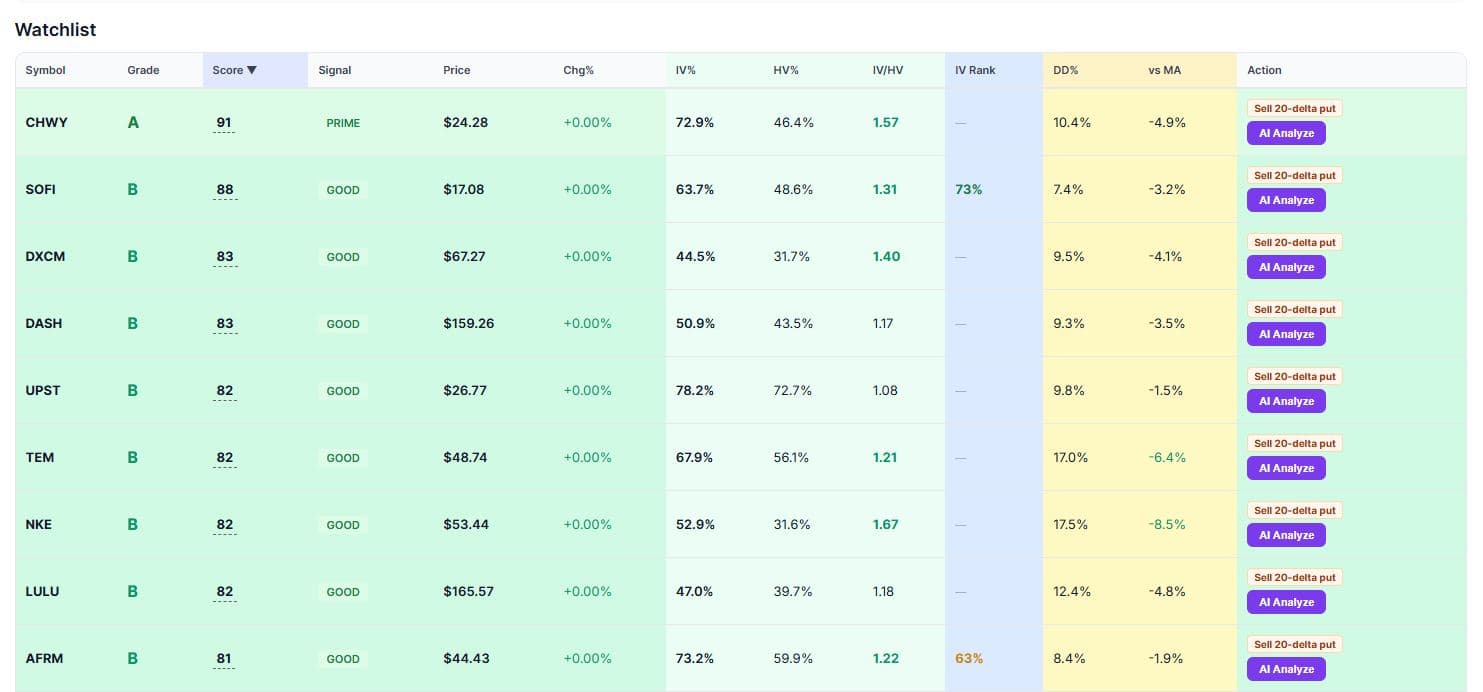
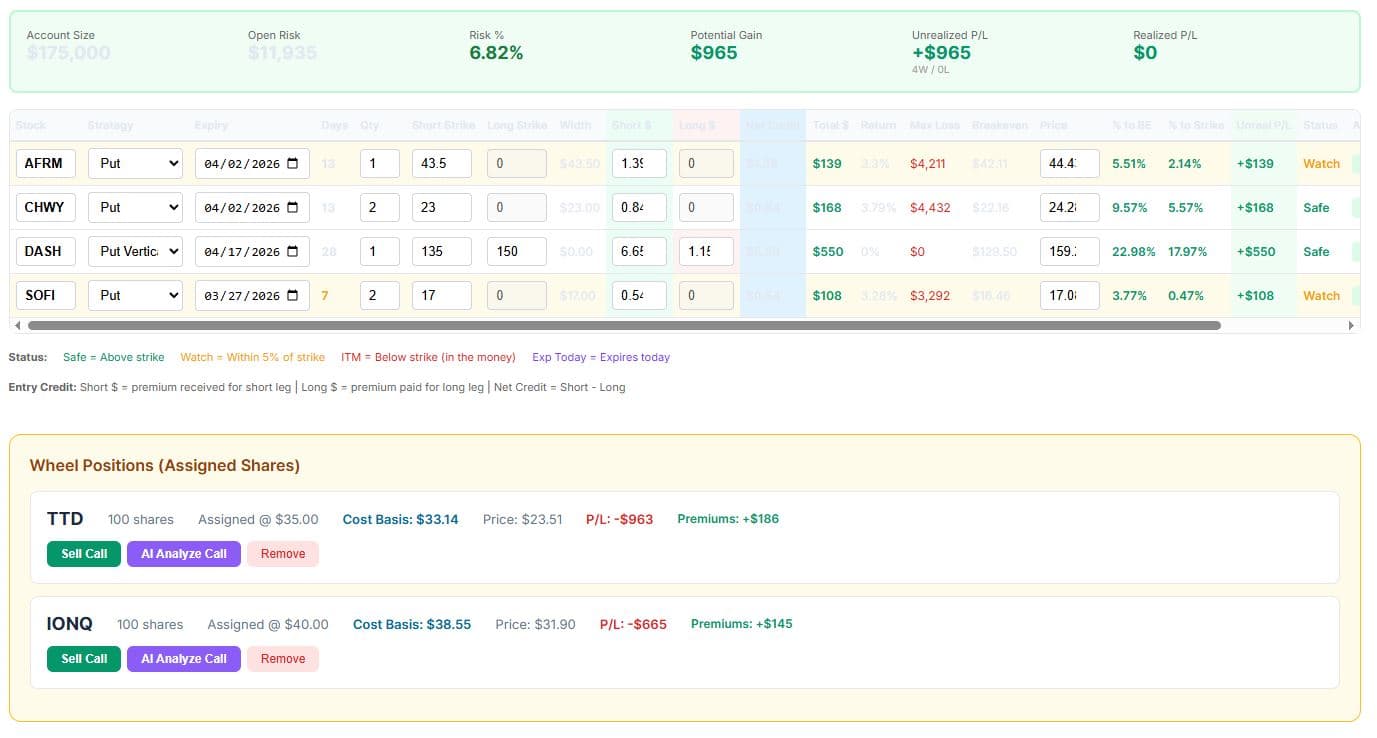
What it is today is a free put-selling tool. The put premium scanner scores 25 stocks every day and grades each setup A through F using IV Rank and IV/HV. There's AI trade analysis (3 a day free), a trade blotter with live P&L, a wheel tracker, a roll calculator, and a market regime dashboard.
So if you want live flow, use one of the tools above. If your real goal is selling premium, Flow Proof is free. There's an optional AI Pro plan at $5/month for unlimited AI analysis, but everything else stays free.
What I'd Tell Someone Starting Today
Use Barchart free and OptionStrat free for a month. Don't pay for anything. Just learn what institutional flow looks like and start noticing patterns.
After that month, ask yourself one question: what specific problem am I trying to solve?
If you want the widest feature set and a big community, go Unusual Whales. If you need real-time speed for day trading, FlowAlgo is built for that. If you want to learn while you trade, Market Chameleon.
If you mostly sell puts and flow was only ever a gut check, you may not need a flow subscription at all. Barchart free covers the gut check, and Flow Proof (free) covers the premium side: IV Rank, setup grades, and trade tracking. I'm biased on that last one, so try it and decide for yourself.
The worst thing you can do is pay $149/month for a tool you use 20% of. I know because I did it for six months.
Key Takeaways
Related Research & Tools
Try the Free Put Scanner
If your real goal is selling premium, you don't need a flow subscription. Flow Proof's put premium scanner, AI trade analysis, and trade blotter are free.
Open Scanner →Frequently Asked Questions
What is the best free options flow scanner?
Barchart has the most useful free unusual options activity scanner. OptionStrat has the best free strategy visualization tools. Both are worth using before you spend anything on a paid platform.
Is Unusual Whales worth the money?
At $48-50/month, Unusual Whales gives you the broadest feature set in the space. Flow alerts, dark pool data, congress trading, and a big community. It's worth it if you need breadth. If you primarily sell options or want to validate whether signals actually work, you may want something more focused.
What's the cheapest options flow scanner that actually works?
Barchart's free tier is genuinely useful for basic screening, and Unusual Whales has a free delayed tier. For real-time data, Quant Data at $37/month is the cheapest paid option with meaningful filtering.
Do options flow scanners actually help you make money?
Raw flow data alone won't make you money. It's a firehose of information and most of it is market maker hedging or spread adjustments. The value comes from filtering by conviction, understanding context, and validating over time. Log every signal you act on (or would have acted on) in a journal so you can answer that question with data.
What's the difference between flow scanners for option buyers vs. sellers?
Most flow scanners are designed for directional traders who buy calls and puts based on institutional sweeps. Option sellers need different things: IV rank screening, premium analysis, and trade management features like roll calculators. Few platforms cater specifically to sellers.